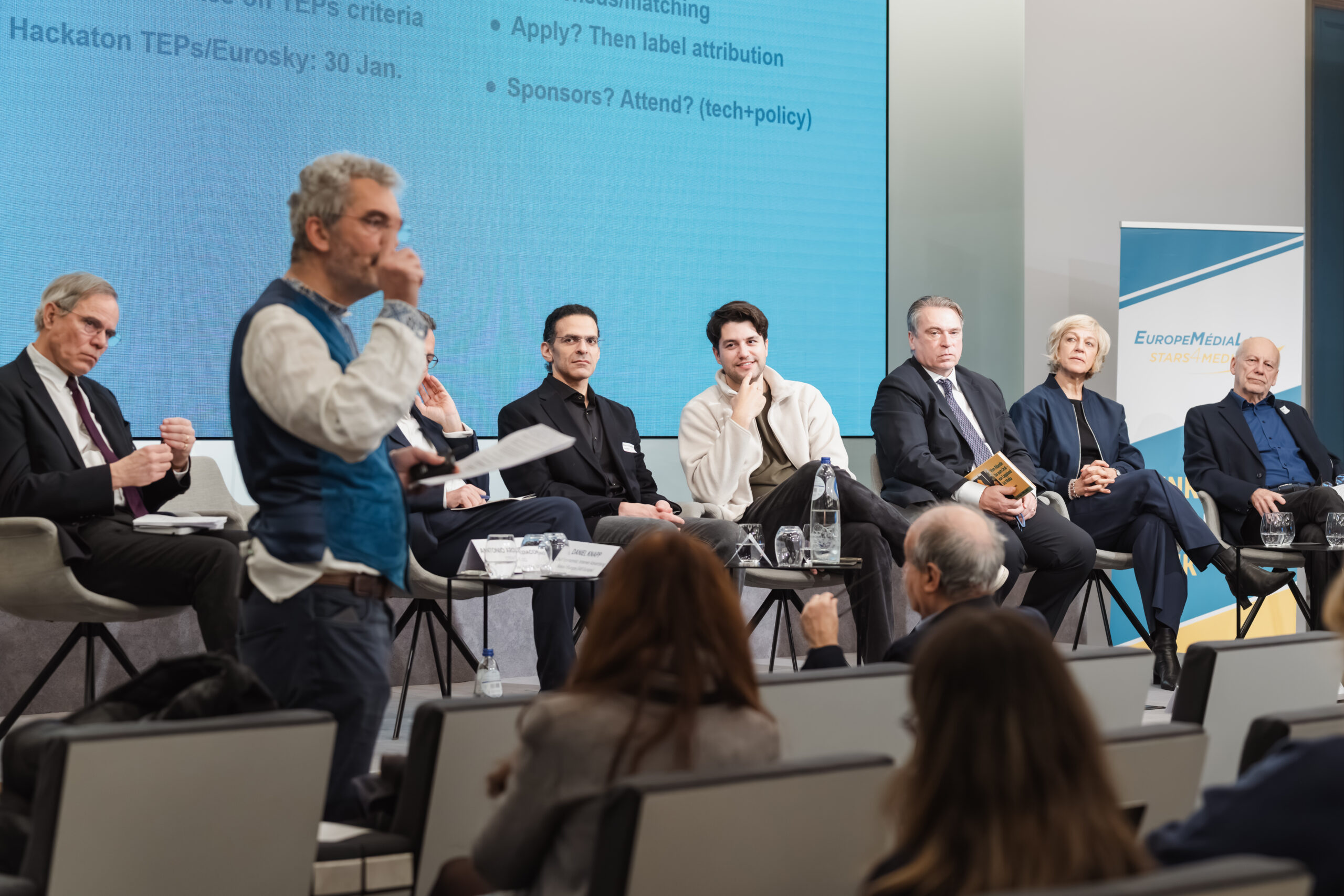
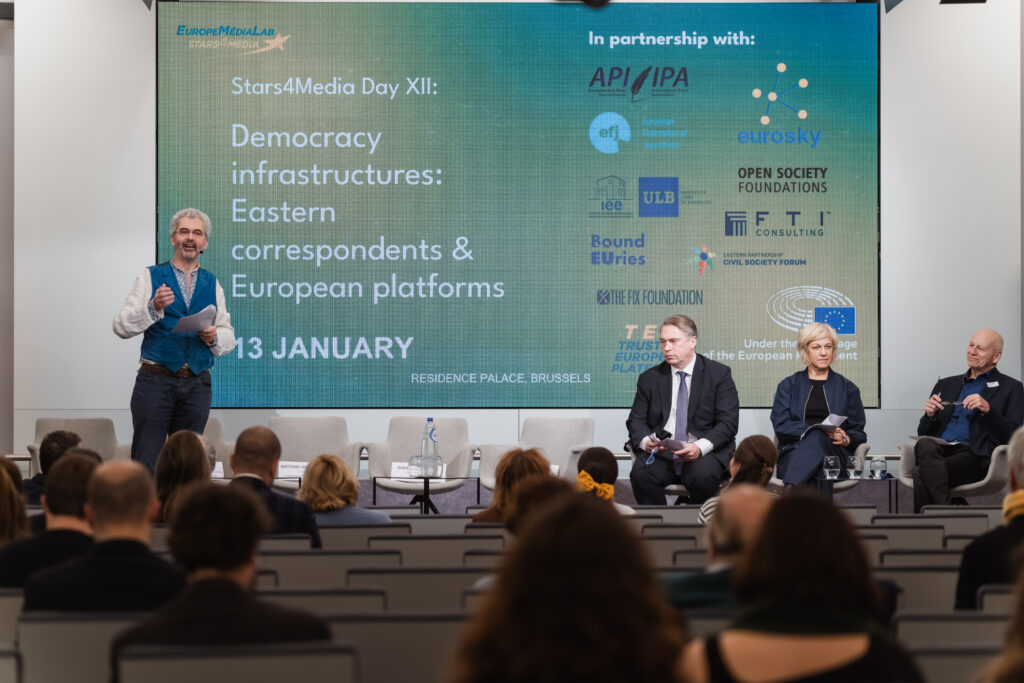
On 13 January 2026, Europe MédiaLab hosted the 12th edition of Stars4Media Day at the Résidence Palace in Brussels. Under the theme “Democracy Infrastructures: Eastern correspondents & European platforms”, the event gathered media professionals, policymakers and innovators. It addressed Europe’s growing dependence on foreign digital infrastructures and its impact on democratic resilience.
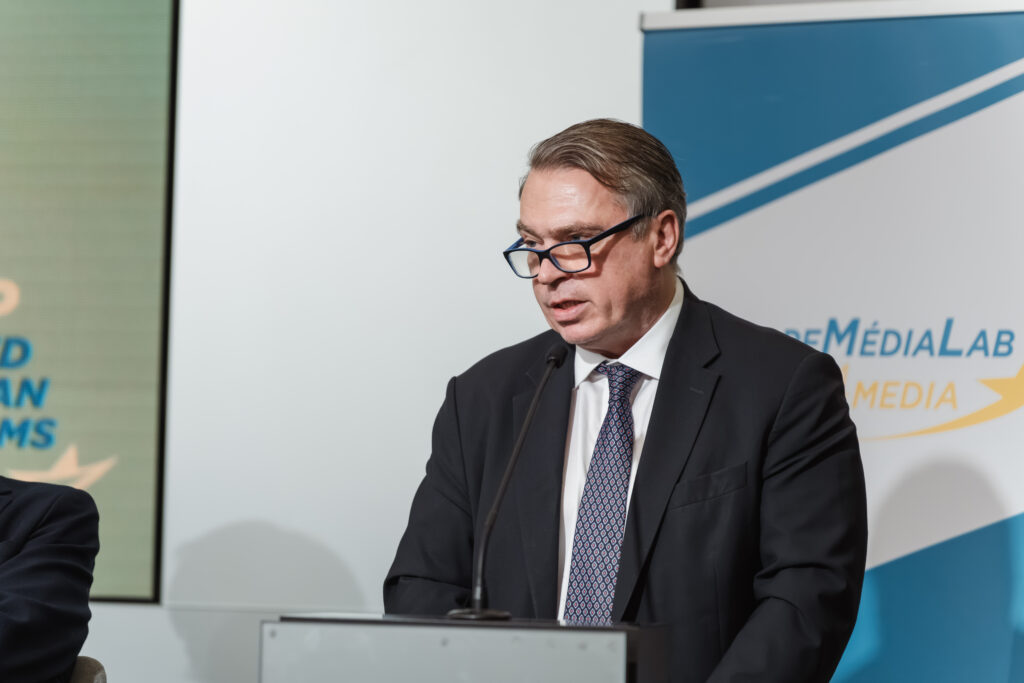
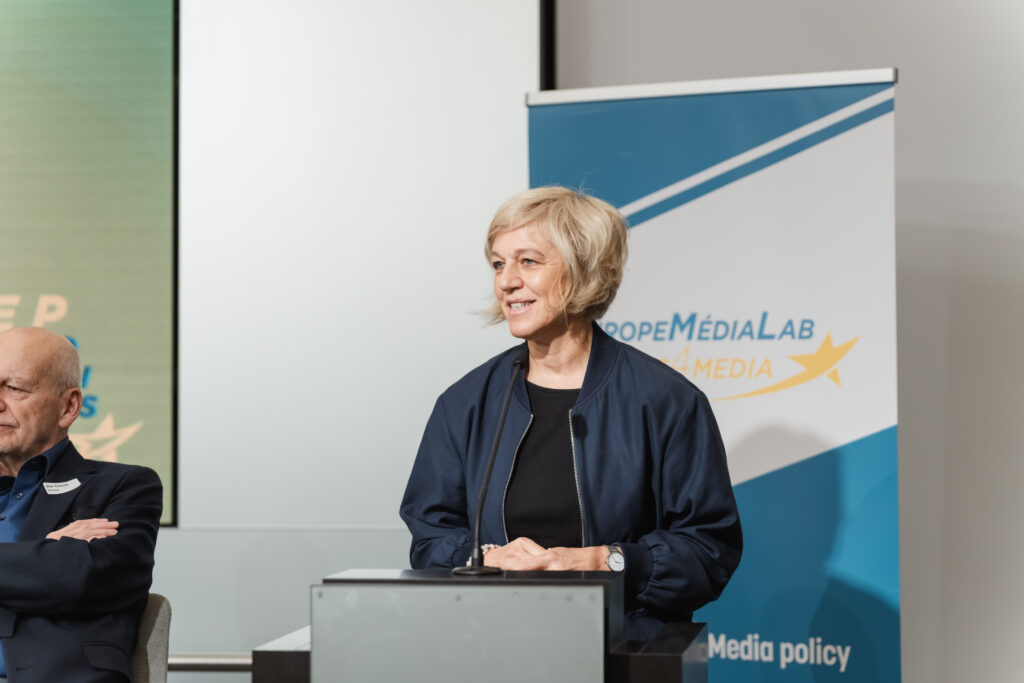
Opening the event, Germany’s Permanent Representative to the EU, Thomas Ossowski, underscored that democracy is not only a set of shared values, but also a system of infrastructures. Building on the French-German Summit in Berlin in November 2025, he stated: “Chancelor Merz as well as President Macron spoke of a European digital comeback, emphasizing the need to move from debate to delivery. […] The recently published European Democracy Shield reflects this growing awareness – and it is a good thing. Its references to digital sovereignty and trusted platforms mark an important step, but it is not an end point; it is a political commitment which we have to fill with life now.”.
Reflecting on the current geopolitical panorama Renate Nikolay, Deputy-Director General at DG CNECT, affirmed that “it is an important moment for Europe to, on one hand, stand-up for the values that we represent; and on the other hand, to game-up. And be a player – not only a taker of the technology that has been developed elsewhere”.
Jim Cloos, Secretary-General at the Trans-European Policy Association, highlighted Trusted European Platforms (TEPs) to strengthen Europe’s strategic autonomy. He reiterated that this “is not about protectionism, not about autarchy. It is about our capacity to develop our own policies, to defend our interests and values together.”
TEPs: market lead and technology readiness
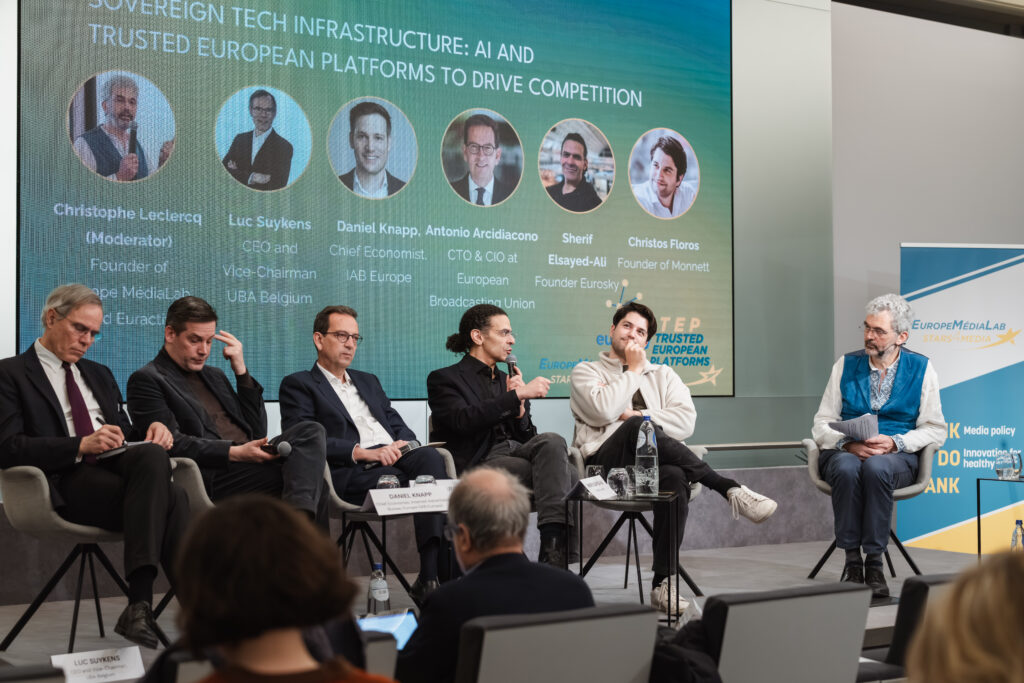
Discussions focused on the emergence of TEPs as a practical response to platform concentration, disinformation and market imbalances. Christophe Leclercq, founder of Europe MédiaLab (and of Euractiv) explained what TEPs are and are not. The draft criteria to define them, regarding “trust” and “European”, were discussed at a workshop the same day, with top experts.
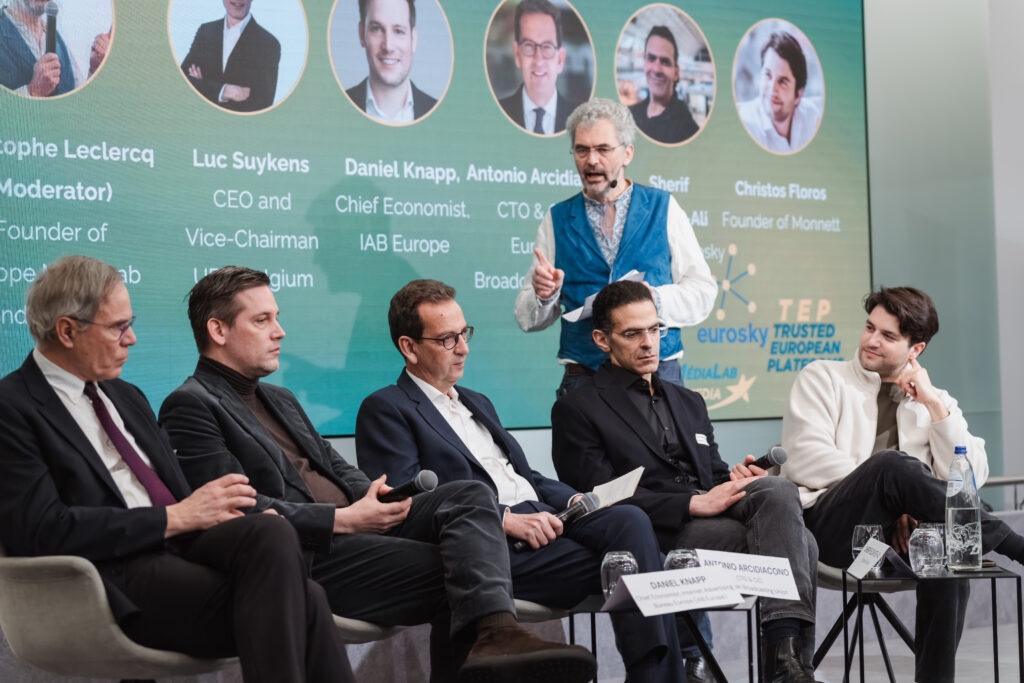
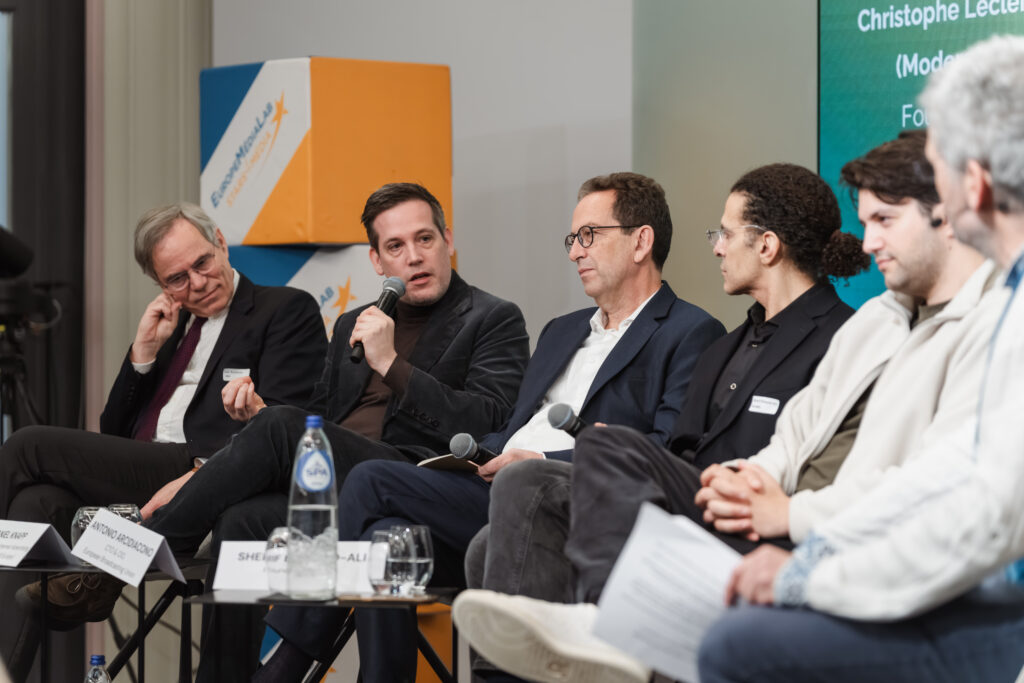
Daniel Knapp (IAB Europe) described the European market for advertising on social media as worth around 50 billion EUR and growing at an annual rate of 6 percent. He warned that “around 90% of that growth is coming from American and Chinese platforms” and that “European endemic media owners – and companies that produce journalism and content – are not equally benefiting from the continued growth in digital advertising.” Luc Suykens (UBA Belgium), reiterated that advertisers when investing in brand building value safe, contextualized and credible digital environments.
Antonio Arcidiacono (CIO at the European Broadcasting Union) and Sherif Elsayed-Ali (Eurosky) described respectively the technical platforms used by public broadcasters and the open-source software used by companies like Bluesky, summarized by this statement: “tech is available”. Combating foreign hegemony means leveraging existing open-source solutions, guaranteeing quality and trustworthiness of content produced in Europe.
Momentum: politics, experts, feasibility, first launches
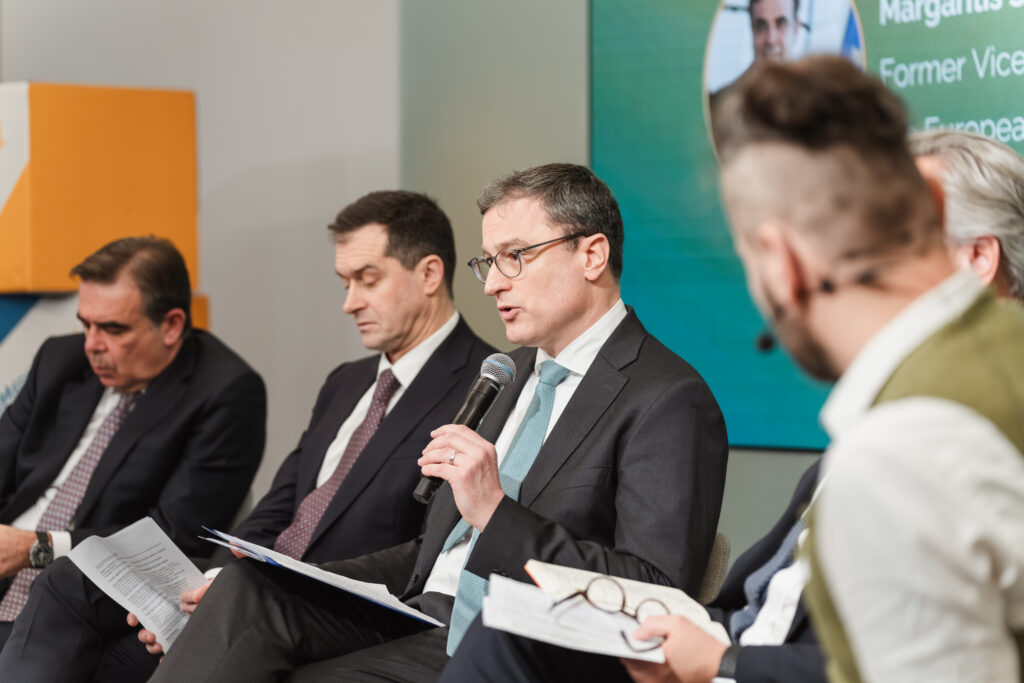
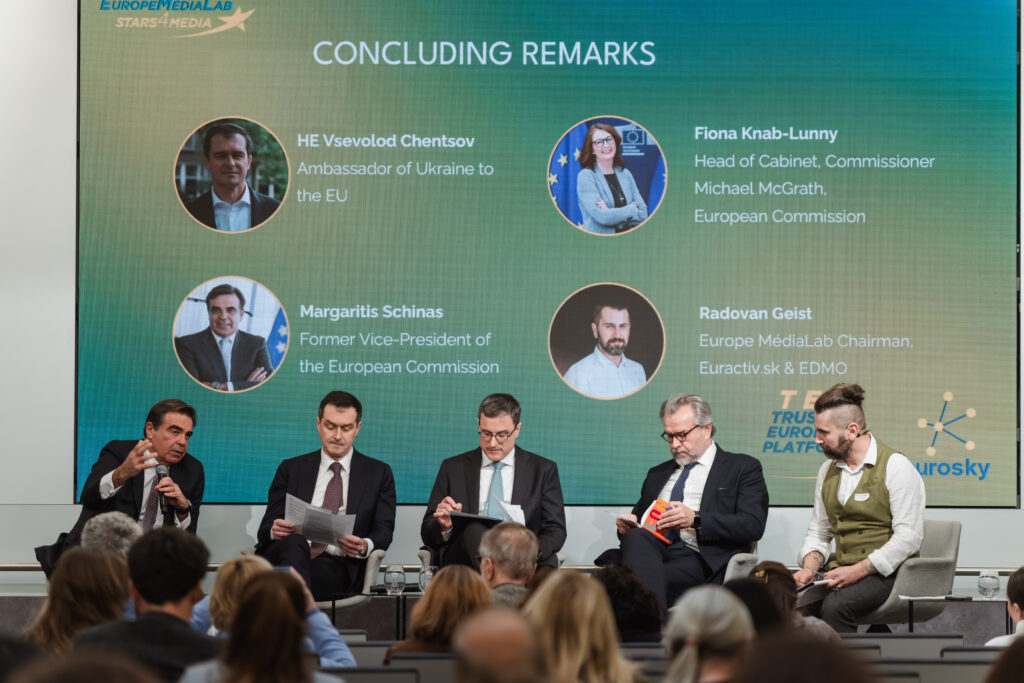
In his concluding remarks, Joachim Herrmann (representing Fiona Knab-Lunny – Head of Cabinet for Commissioner McGrath) emphasised that “democracy now depends on trusted information to sustain a healthy public debate”.
Margaritis Schinas (former European Commissioner), wrapped-up by stating that trusted platforms “are part of what European strategic autonomy really means – the fact that we should be able to identify, align and project our priorities in a way that serves us, through intelligent systems like these.”
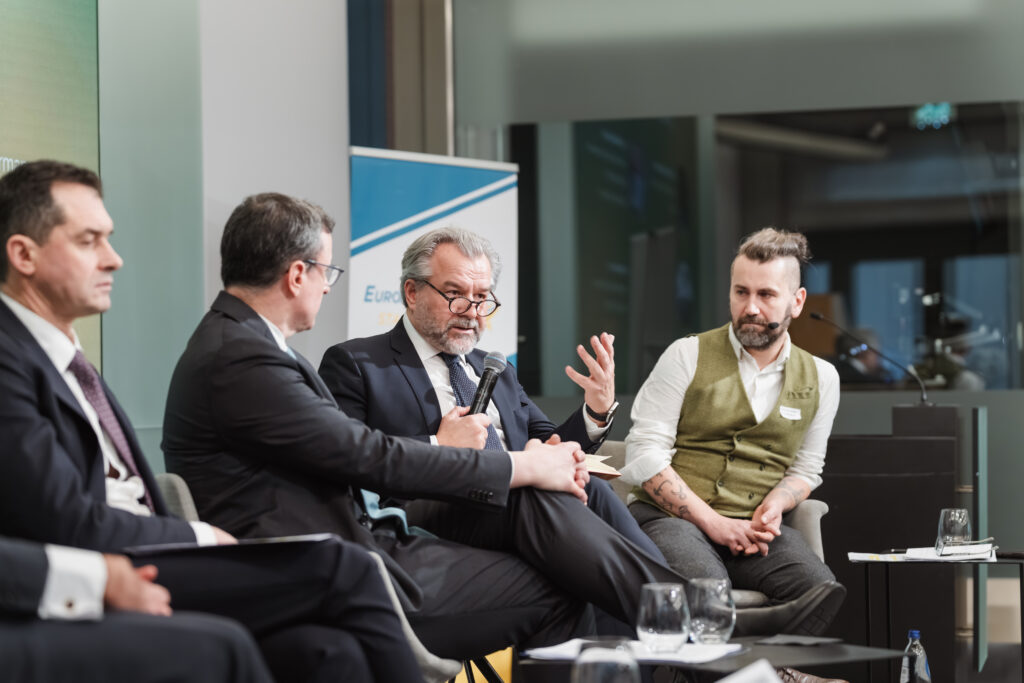
Overall, Trusted European Platforms were supported by participants, with repeated calls for the European Commission to launch a feasibility study on the initiative. For example, Anthony Gooch Gálvez (Secretary General of the European Round Table for Industry ERT) stated that “the ideas that have come out today regarding feasibility studies would be able to show that ‘there is something there’”. Moreover, the room also heard support for the creation of an expert group to define transparent and credible criteria for TEPs. This was singled out by Vsevolod Chentsov (Ambassador of Ukraine to the EU), as an essential next step to move beyond regulation and towards competitive and trustworthy European alternatives.
Christophe Leclercq added: ‘Things start to speed up, it’s time for the EU to accompany this.
Potential Trusted Platforms include for me seven examples already:
– existing ones, with further social media development, for example from EBU and from ARTE
– new ones. Mastodon is the initial one. Stars4Media included Christos Floros (Monnett.social), among the first of a new wave of start-ups, reminding me of the dotcom era. Wsocial is presented at Davos by its founder Anna Zeiter, and asked me to be on their Advisory board. See.EU (European Streaming News Network) would be new too, but based on media broadcasting content
– also some US ones could be considered as trusted (although not ‘European’): BlueSky (was speaking next to me at the Eurosky event in Berlin around digital sovereignty) and Wikipedia, one of the world’s largest and most trusted websites.”
NOTE TO THE EDITOR:
Participation and Scope: The Stars4Media Day XII hosted over 250 participants, the majority in person at the Résidence Palace. They represented a balanced cross-section of journalists, media associations, EU institutional and governmental representatives, corporate leaders and members of academia. This diversity facilitated a multi-dimensional debate on the intersection of media freedom, technology, advertising and democratic resilience.
Beyond technological infrastructure, the conference also addressed the need to invest more in strengthening the human infrastructure supporting our democracies. See Europe MédiaLab’s second press release on the same event (Beyond the Bubble: empowering democracy through Eastern voices in Brussels).
Strategic Workshop: Following the public conference, a select group of experts participated in a closed-door workshop preparing the “Club for TEPs”, and TEP’s criteria to be confirmed by an expert group. This session explored the technical features, business feasibility, and market challenges of establishing Trusted European Platforms (TEPs).
Upcoming Events: As a direct next step, a hackathon will take place on January 30, 2026, in Brussels. Organized by Open Source Village and Eurosky as part of the FOSDEM 2026 event, the hackathon will bring together policy experts, coders, and entrepreneurs. This event will exemplify the practical build-up of European social media alternatives and open-source infrastructure. Be part of the movement for digital sovereignty and register to help build the social media infrastructure Europe needs for resilient democracies.