
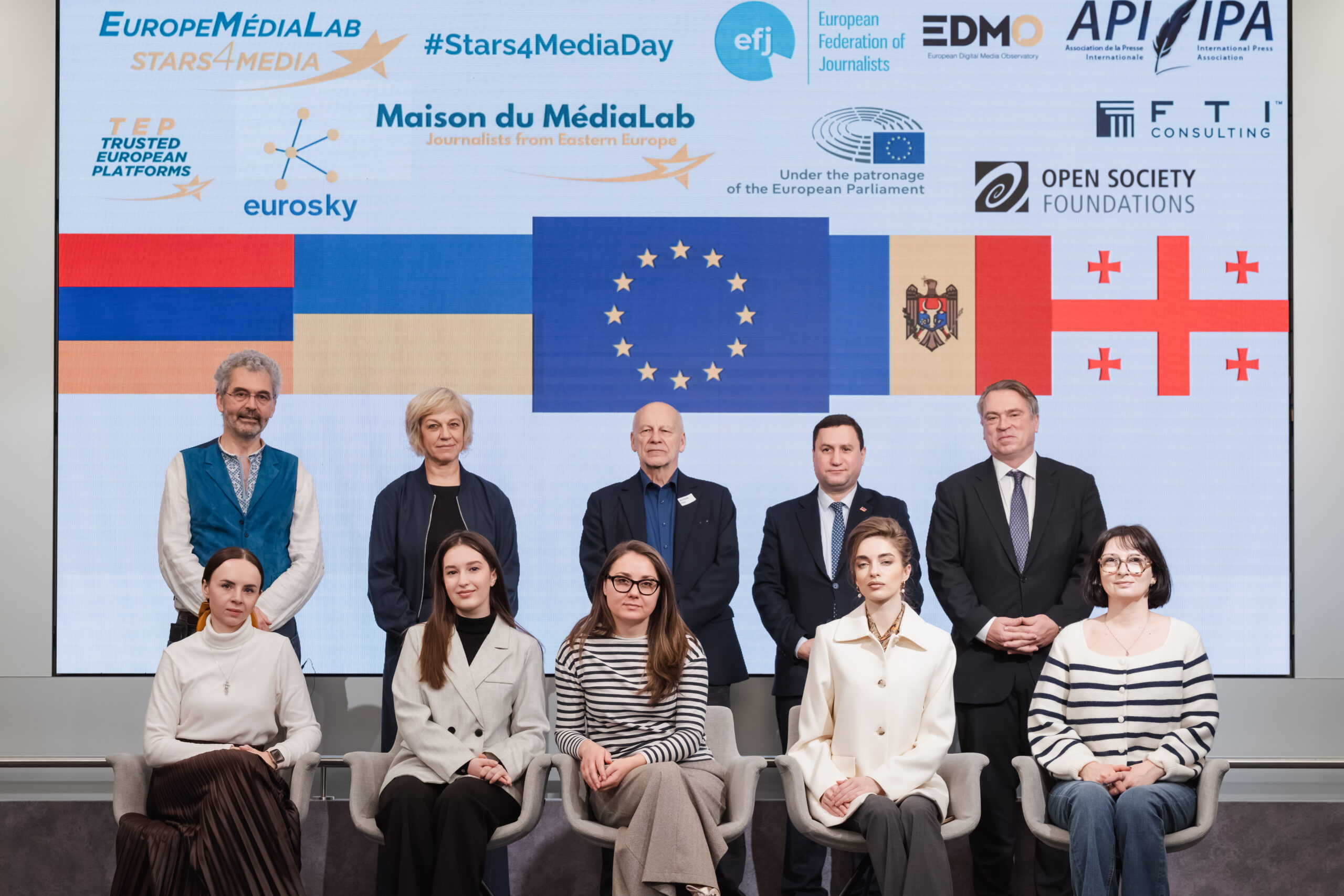
On Tuesday, 13 January 2026, Europe MédiaLab hosted the 12th edition of the Stars4Media Day at the Résidence Palace, seat of its office in Brussels. Under the theme “Democracy Infrastructures: Eastern correspondents & European platforms”, the event gathered 250 media professionals, policymakers, and innovators to debate media freedom, technology, geopolitics, and democracy.
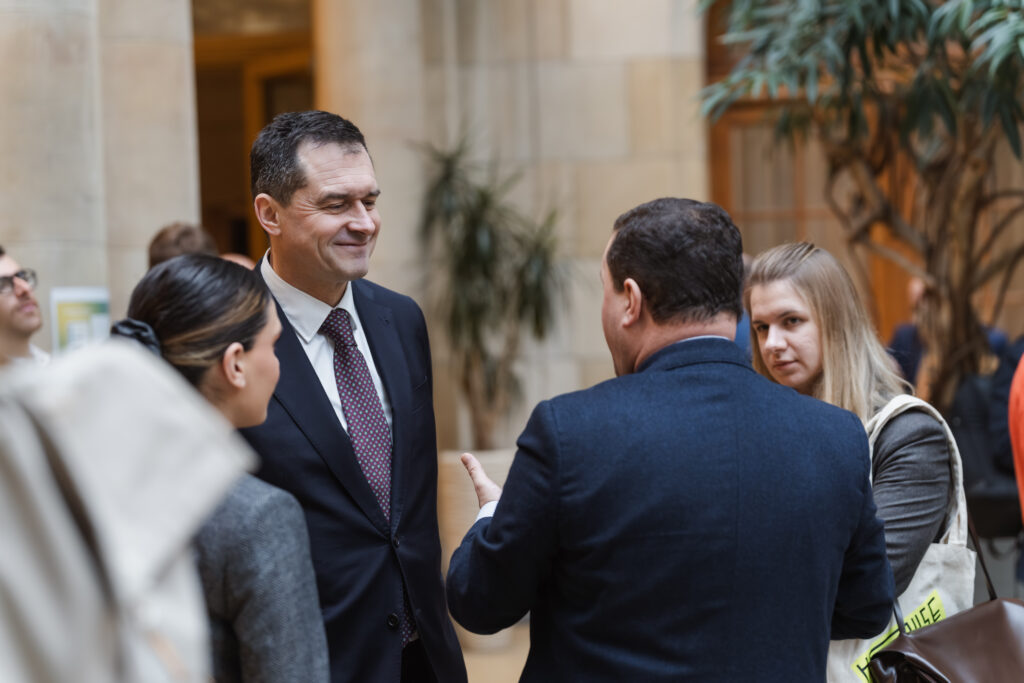
The conference was preceded by a reception on 12 January at the Maison du MédiaLab. The gathering included the Ambassadors of Armenia and Moldova to the EU, highlighting the importance of the programme, co-founders, media, and selected partners. The “third wave” of resident correspondents was introduced to the guests: journalists from Armenia, Georgia, Moldova, and Ukraine hosted in Brussels.
Eastern correspondents: part of democracy infrastructure
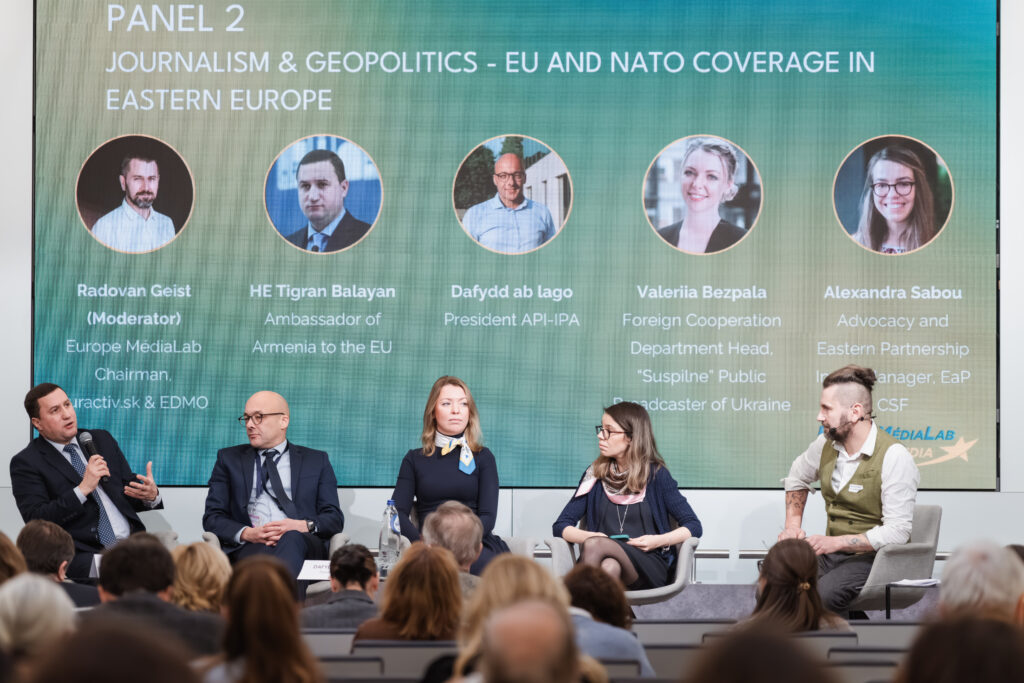
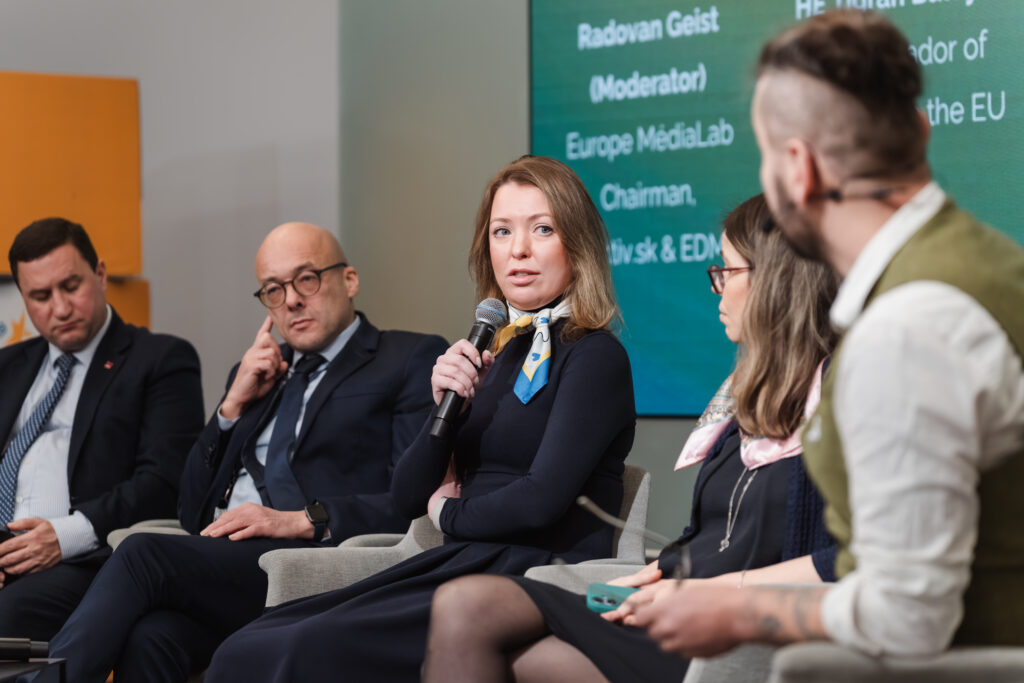
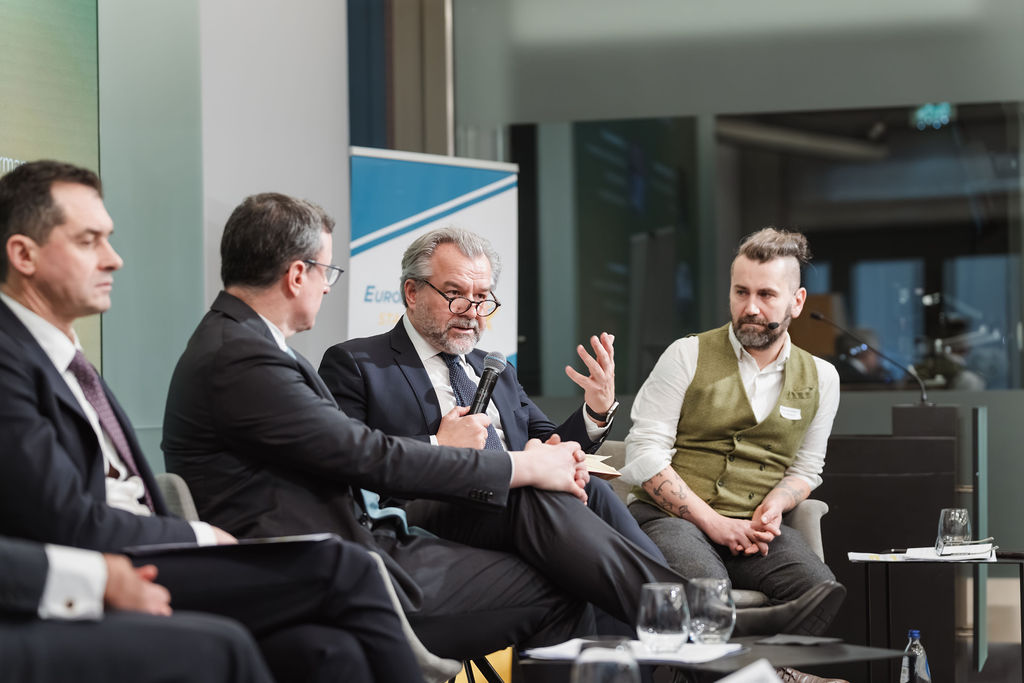
The following day, one of the conference’s three panels focused on the human infrastructure of democracy. In the news media, there are too few correspondents reporting from Brussels about the EU and NATO for Eastern European audiences. The discussion was led by moderator Radovan Geist (Europe MédiaLab Chairman), and featured an exchange between HE Tigran Balayan (Ambassador of Armenia to the EU), Dafydd ab Iago (API-IPA), Valeriia Bezpala (Ukraine’s “Suspilne” Public Broadcaster), and Alexandra Sabou (Eastern Partnership Civil Society Forum).
The panel members reflected on bridge-building efforts between the EU and future accession countries, highlighting the importance of independent media and their correspondents in qualitative reporting and enlargement processes. Valeriia Bezpala predicted a continued trend in media cooperation, reflected by a consistent increase in the “volume of materials that we [Suspilne] are using from European broadcasters, and that European broadcasters are using from our news pool”. She also highlighted the importance of Suspilne’s correspondent presence in Brussels, providing first-hand qualitative reporting for their audience.
Media and platforms as pillars of democracy
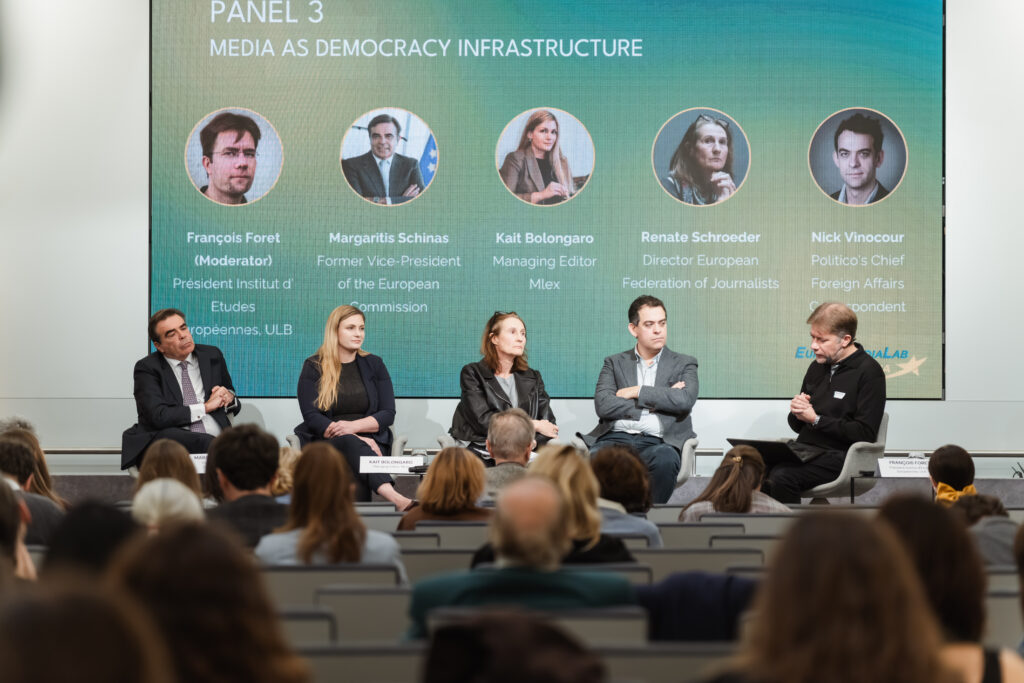
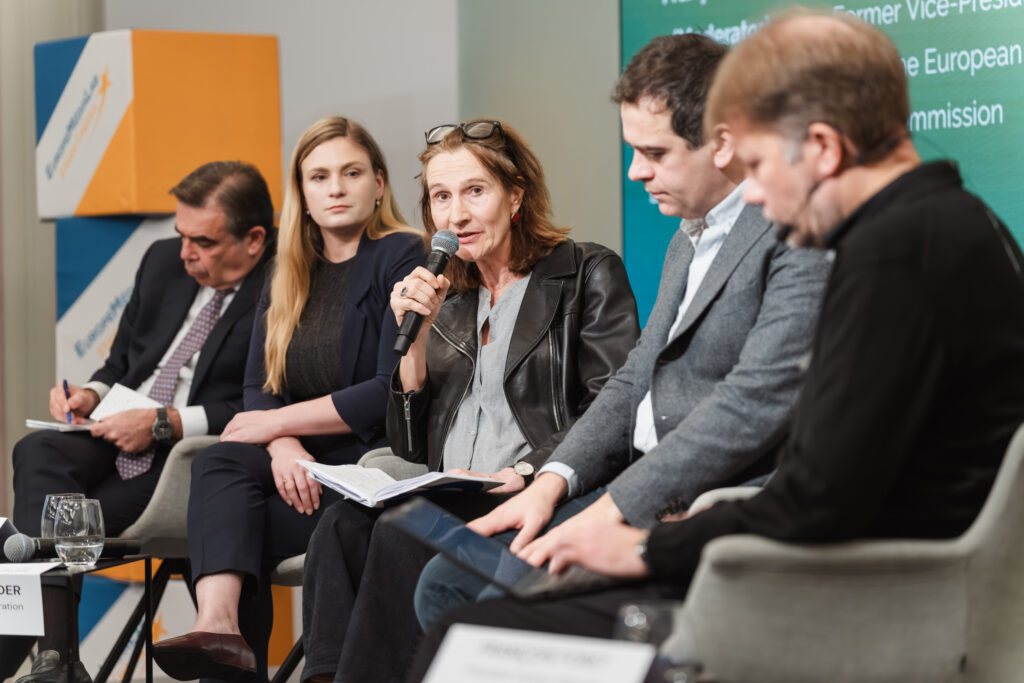
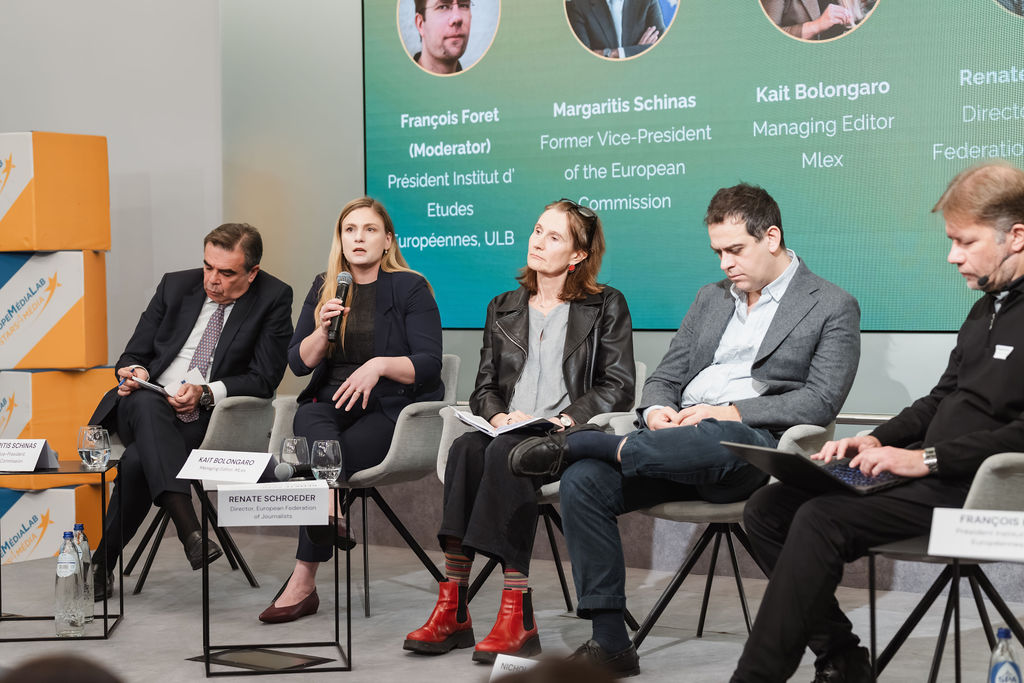
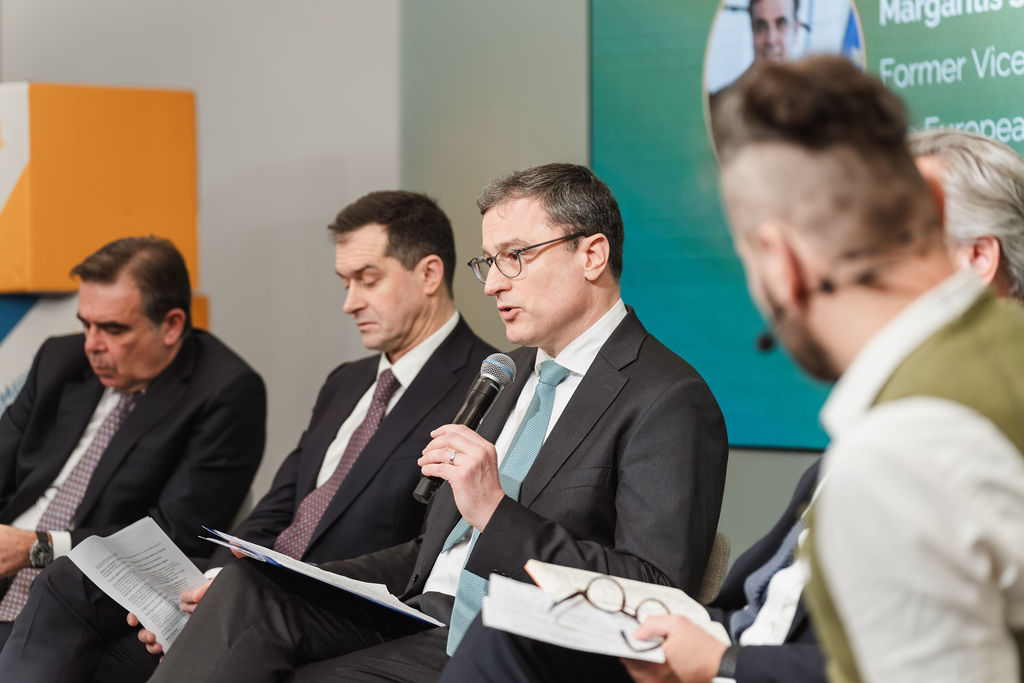
Margaritis Schinas (Former Vice-President of the European Commission) opened the final panel on media as a democracy pillar, by asserting that the creation of “democracy infrastructures” must not be a “totemic self-serving objective“. Instead, he argued it “should be the logical outcome of a process rooted in the rule of law, transparency, and a European prioritisation of news stories” – which makes, in his view, the Trusted European Platforms something “perfectly feasible“.
Nick Vinocur (Chief Foreign Affairs Correspondent at Politico) and Kait Bolongaro (Managing Editor at Mlex) highlighted the importance of having a growing body of Brussels-based journalists covering policy media and working to ensure that decision-making remains democratic. In that regard, she stated that “the presence of more journalists getting to the bottom of any stories or rumours that we hear in the corridors of power means that it is going to be a more transparent place”.
Building on Margaritis Schinas’ remarks addressing the disconnect between the ‘Brussels bubble’ and EU citizens, Renate Schroeder (EFJ) showed concerns about the growing gap between the two realities, as well as about the effects of increasingly precarious work conditions for correspondents. She stated: “their number has halved since I am here”.
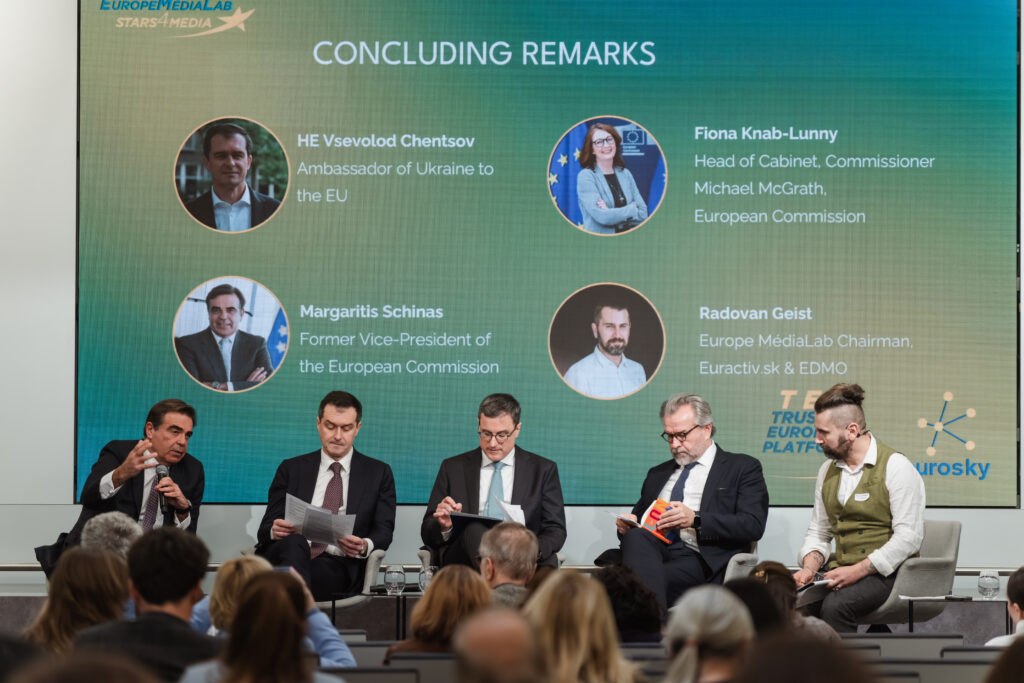
The conference was concluded with the remarks of Anthony Gooch Gálvez (Secretary General of ERT), Margaritis Schinas, and Joachim Herrmann (representing Fiona Knab-Lunny – Head of Cabinet for Commissioner McGrath) – with Herrmann emphasizing that in the EU and its like-minded partners “democracy depends now very much on trusted information to sustain a healthy public debate”.
Furthermore, Vsevolod Chentsov (Ambassador of Ukraine to the EU) added that “European media can also learn a lot in Ukraine. That is why it is very important that not only Member-states, but also candidate states and its actors, are invited to join the Democracy Shield”.
NOTE TO THE EDITOR:
Participation and Scope: The Stars4Media Day XII involved over 250 participants, the majority in person at the Résidence Palace. They represented a balanced cross-section of journalists, media associations, EU institutional and governmental representatives, corporate leaders, and members of academia. This diversity facilitated a multi-dimensional debate on the intersection of media freedom, technology, advertising and democratic resilience.
Beyond human infrastructures, the conference also addressed the need to invest more in strengthening the technological infrastructures supporting our democracies – for example, through the development of initiatives like Trusted European Platforms – as Europe MédiaLab’s second press release on the same event (Sovereign Democracy & Trusted European Platforms: starting!).
A year ago, the programme Maison du MédiaLab was inaugurated, with selection partners European Federation of Journalists, and Association de la Presse Internationale. It aims to triple the number of correspondents from Ukraine, Moldova, Georgia, and Armenia in Brussels. This event launches its third wave of Maison residents, already doubling it. Given Russian destabilisation, future EU enlargement, and US AID disbanded, this should be a priority. Independent media’s resources are shrinking: will the EU step in?